
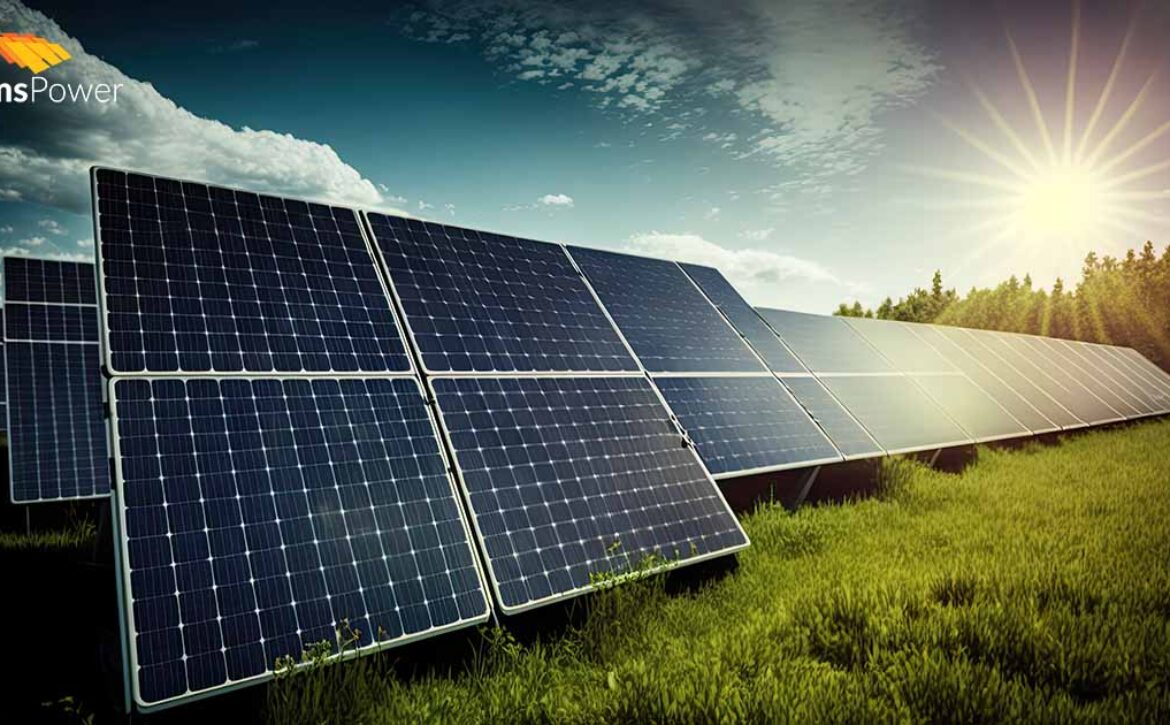
Solar Firms Say Raising Finances for Projects ‘Most Difficult’
“Banks are not willing to finance off-balance sheet solar financing,” said Omar Malik, CEO Shams Power. “They need some assets or hard collateral, which is difficult to arrange to back large solar plants.”
Shams Power is a joint venture of two energy companies (PITCO and Orient Operating Company), which offers solar power for the next 20 years on a Build Operate Own and Transfer (BOOT) basis. It has so far served 30MW of clean energy.
Former director of a solar company Netline, Umair Zavary termed financing the biggest hurdle at the moment for companies to install solar plants to fulfill their consumption.
“Companies want to install solar plants because these plants definitely provide cheaper energy. Moreover, it also helps exporting firms achieve their environmental goals, which are being made mandatory in many export destinations of Pakistan companies,” he said.
Unlocking climate funds: Pakistan faces several roadblocks
Dr Khalid Waleed, a PhD in Energy Economics with over 10 years of experience in Pakistan’s energy sector, concurred that accessing finance for the solarisation projects is an arduous job in the current macroeconomic scenario.
“There are now no schemes for solar financing from the State Bank except for a limited support for solarisation of tube-wells,” he told Business Recorder.
“Since the central bank isn’t interested in the current macroeconomic condition when interest rates are very high, commercial banks don’t have a reason to finance solar projects either. They want to invest safely and where they can get good returns. Returns are low in the renewable sector,” he added.
Waleed was of the view that foreign investors aren’t interested too in renewable projects because of different reasons.
“The Private Power & Infrastructure Board (PPIB) floated bids for a 300MW solar plant and nobody bid for it for multiple reasons.
“There is political instability and then macro-economic uncertainty too. Moreover, our grid is outdated, which trips on renewable energy sources – solar and wind because they are variable.
“So the National Transmission and Despatch Company (NTDC) prioritises fossil generated electricity such as coal. And then we already have excess capacity. So, it doesn’t make economic or business sense for the investors,” Waleed said.
What do international financial institutions think?
GuarantCo is an international financial institution that provides guarantees to banks to finance infrastructure development where the banks don’t feel comfortable to finance on their own.
‘Contrary to popular belief, Pakistan among our best-performing markets’
Philip Skinner, Managing Director, Global Execution Team at financial institution GuarantCo, explained to Business Recorder in an earlier interview that the model of GuarantCo is to “guarantee financing for infrastructure development where banks don’t feel comfortable. But we hope that gradually banks will develop trust in that certain space”.
Speaking about facilitating financing for Shams Power to provide rooftop solar plants for commercial and industrial use, he said they are hopeful that banks would gradually start developing trust in solar companies.
“And then we can move to something else, for instance, electric vehicles,” he said.
Raising finances for solarisation
Shams Power has recently raised Rs1.5 billion ($5.2 million) finance solution to invest in distributed solar plants at commercial and industrial locations across Pakistan.
GuarantCo, part of the Private Infrastructure Development Group (PIDG), and Bank Alfalah have provided Shams Power with this finance solution to support the construction of 10MW of small rooftop and ground mounted solar plants at commercial and industrial sites across Pakistan to reach grid connected businesses.
NASA official says ‘no Plan-B’ to Earth
Shams is a distributed solar developer with a total of 27 projects and an installed capacity of 25MW across Pakistan. Eighteen projects with a capacity of 21.2MW were completed and became operational under the first phase of the Rs2 billion ($11.3 million) facility provided by GuarantCo and Bank Alfalah in December 2021.
The finance solution of Rs1.5 billion debt provided by Bank Alfalah is 75% guaranteed by GuarantCo.
The company says the financing solution will support solar projects across Pakistan, which will reduce reliance on the grid, reduce energy costs for the commercial and industrial clients by up to 50%, and save an estimated 10.2k of CO2 emissions per year.
According to Shams Power, it is working on the ‘pay as you use’ model through which business users will benefit from a saving of 30% to 50% on their electricity costs through the solar systems.
It may be noted that government departments’ land and roof are considered goldmines to generate electricity.
Omar Malik said right now they use private spaces – mostly roofs and grounds of companies that are provided with solar energy projects.
However, he added, the government departments such as schools have a lot of space at crucial locations. There can be public private partnerships and the government departments can have electricity produced for their own use and they can also sell excess back to the DISCOs as well, according to Malik.
However, he was of the view that a strong and viable security package should be offered to investors putting up solar at government buildings on a BOOT basis (build own operate transfer) under such a Private Public Partnership, because government departments’ credit quality is poor.
Underperforming solar panels
Omar Malik said there are ample checks and balances of the Alternative Energy Development Board (AEDB) to ensure the quality of imported solar panels. Around ,3000MW of quality were imported last year.
Last year, AEDB was merged with the Private Power and Infrastructure Board (PPIB).
However, there are some cases where people complain that they face issues with the expected output of electricity that was promised by solar plant installation companies.
Govt must reduce its footprint from businesses, says caretaker energy minister at KLF
“There have been some cases of import of low quality solar panels. However, one of the biggest issues that the people with solar plants face is not quality but maintenance. We have dust issues in all cities. In Karachi, panels get dirty in 15 days; in Lahore and in Islamabad 25 days. Panels need to be cleaned in a month for optimum performance,” said Umair Zavary.
Other than that, the two industry officials highlighted that there is also an issue of underperformance of solar panels.
Performance of solar panels doesn’t only depend on the quality of the solar panels. There also has to be expertise of the companies and people installing them, they maintained.[/vc_column_text][/vc_column][/vc_row]