Shams Power registers Pakistan’s first project with I-REC


Shams Power registers Pakistan’s first project with The International REC Standard Foundation (I-REC Standard Foundation).

Shams Power has navigated through the detailed process of registering its solar power projects to claim Renewable Energy Certificates. Pakistan has registered its first device at an unprecedented pace, demonstrating the potential for the RECs market.

The I-REC Standard Foundation (I-REC Standard) just announced in December 2022 that Pakistan Environment Trust (PET), the I-REC(E) Issuer in Pakistan, has approved the first tradeable energy certificates in the country. PITCO was the technical consultant who helped Shams Power through the registration process.

REC allows renewable energy project developers (Shams Power) to value and sell renewable energy’s carbon offsetting benefit without physically supplying the renewable energy units. At the same time, it helps buyers to offset their Scope 2 Emissions. So, if a company pays for REC certificates, it will get the same benefits from renewables as it used to get from non-renewable. Hence, with the help of the Pakistan Environment Trust (PET), these benefits are facilitated locally.

To further discuss this initiative and registration concept, a Podcast was held online on Twitter between Pakistan Environment Trust speakers and PICTO’s Technical Lead, Mr. Qazi Sabir. The podcast covered a detailed conversation on how the IREC will accelerate Pakistan’s Green Energy Transition.

As in a Podcast, Mr. Qazi Sabir said:

“IREC is the new phenomenon in Pakistan, and the registration of IREC projects adds another feather to PITCO’s hat.”

He further mentions that IREC standards will assist the private sector in lowering emissions and strengthening the supply of renewable energy. Furthermore, it assists sectors like Export Industries in meeting their green targets and collaborate worldwide with partners who desire greener and carbon-free operations standards. Moreover, even if a company already follows Net Zero standards and might only practically shift a portion of its energy load to renewables, the remaining load can be easily offset by purchasing Renewable Energy Certificates (REC).

Shams has registered its multiple solar projects to claim Renewable Energy Certificates (REC), and PAT requested Shams to give photographs of the meters and their calibration to check accuracy. More so, all additional details were submitted to PAT, who then submitted them to the IREC Foundation for successful registration of the projects.

A Commercial Solar Guide for Businesses who want to switch to Solar

[vc_row][vc_column][vc_column_text][/vc_column_text][vc_column_text]Theoretically, most people can easily comprehend how solar PV cells generate energy. When sunlight shines on the solar panel, PV cells absorb it to create an electric charge.

However, when it comes to getting a solar system, especially on a commercial scale, many doubts and questions may arise. For example: Are solar panels economically beneficial? How do I start? Is it useful for my company? How long will it last? And a lot more. Worry not; in this blog, you can learn everything there is to know about on setting up a solar energy system for commercial and industrial buildings.

Let’s begin with the most important points.

Why does my company need to adopt solar?

The greatest advantage of going solar for commercial & industrial buildings is a significant decrease in electricity costs. Commercial & Industrial buildings such as offices, shopping malls, factories, manufacturing plants, and other structures have high energy needs. By converting to a commercial rooftop solar system, you can harness the sun’s abundant energy to run most of your operations on discounted solar energy.

Moreover, you can take advantage of the financial incentives and subsidies that the Government provide, such as the State Bank of Pakistan solar financing program for companies going solar.

Going Solar will do wonders for your company’s reputation. You are viewed as a green, environmentally conscious company, which enhances the perception that consumers, shareholders, and the general public have of your brand.

A Commercial Solar Guide for Businesses who want to switch to Solar

What is the installed capacity of the solar plant?

The area on your rooftop, car parking area, and other variables play an essential role in considering the installation capacity of a solar plant. Design Engineers of Shams Power may help you determine your solar structure’s energy savings, solar power capacity, and other details. You only need to provide a few informational pieces, such as your state (region), average monthly electricity costs, space available in square feet, and the type of connection (commercial or industrial). The design engineer will analyze the information to provide further information about your building’s rooftop solar power capability.

A Commercial Solar Guide for Businesses who want to switch to Solar

What is the financial cost of going solar?

Nothing!

Yes, you have read that right. Shams Power offers Power Purchase Agreements on the BOOT (Build- Own – Operate – Transfer) model, a unique solar solution where Shams Power will invest, design, construct and operate the solar power plant at the client’s premises. While the client only has to pay a guaranteed discounted tariff for the solar energy consumed without the burden of any capital investment or operational hassle, ensuring savings from Day 1.

For more information about our PPA model, visit : https://www.shams-power.com/ppa-solar-plant/

What are the other considerations while going solar?

Placement of the solar powers

Despite having a huge space, you can only use a portion of it. Numerous elements must be considered, including ideal solar exposure, potential physical obstacles causing a shadow, and other geographical issues.

How to Select the Best Solar Partner?

It would be best to consider aspects other than installation costs, such as developers’ credentials, experience, and expertise in the industry. Investigate and make a shortlist of the top 5 solar power generating companies and obtain quotes from them. In addition to the rates, compare and analyze the types of services, post-installation offerings, operations, and maintenance they are willing to provide in their agreement. It can save you time, energy, and money because the company handles all procedures.

With the worsening climate and rising energy costs, it’s time to get going with an eco-friendlier and economically feasible option, so utilize this guide and get started with solar for your company.[/vc_column_text][/vc_column][/vc_row]

Read More

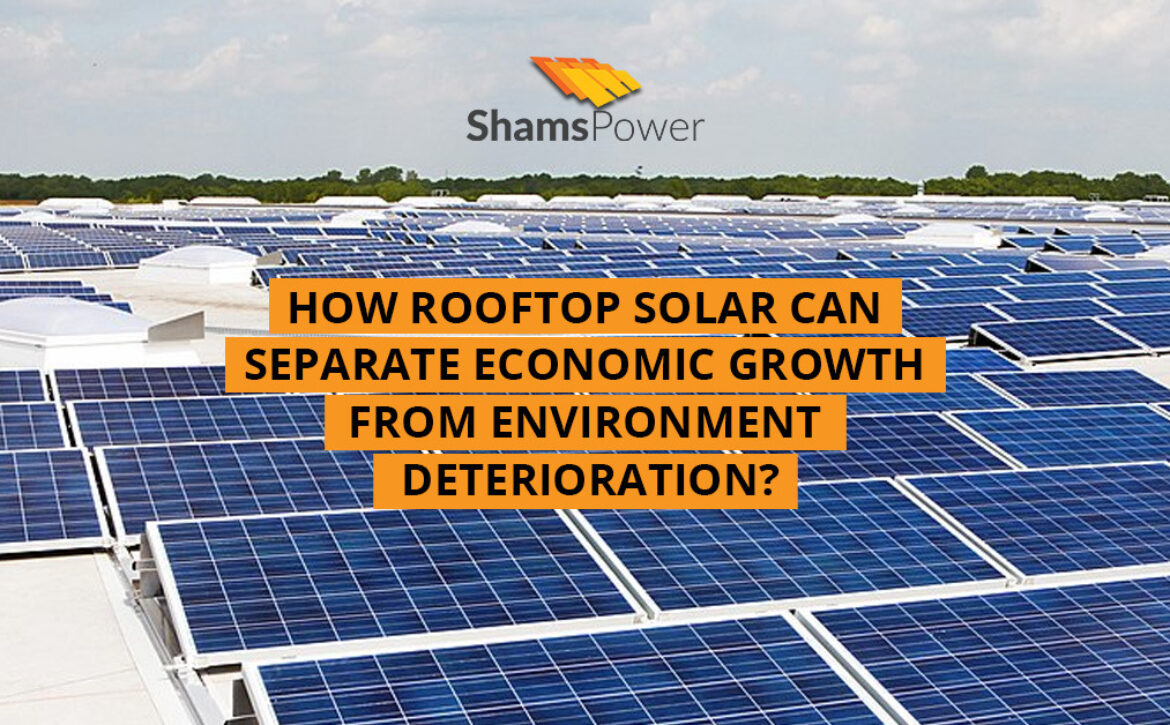
How Rooftop solar can Separate Economic Growth from Environment Deterioration?

[vc_row][vc_column][vc_column_text][/vc_column_text][vc_column_text]Climate change is undeniably a real issue resulting from global warming. The global population is growing at a 1.1% annual rate. The United Nations predicts that by the end of the century, there will be more than 11 billion people on Earth. To meet the fundamental demands of this rising population, global GDP must increase by roughly 3.5%. The researchers ‘RCP 8.5’ scenario predicts global warming up to 4 degrees Celsius if current conditions continue. Therefore, urgent action is required to solve the problem of sustaining the expanding population while reducing GHG emissions.

Why is it necessary to separate emissions from economic growth?

In the past, economists believed in the “Environmental Kuznets Curve,” which postulates that while economic growth initially causes environmental deterioration, the degradation rate reverses after a certain point. However, modern research has found that we run the risk of stepping outside the bounds of the planet even before the essential criterion of reversing environmental damage is reached. Considering these realities, academics and politicians are increasingly interested in separating economic growth and environmental challenges. At first resource efficiency was considered to be the decoupling approach. It has been noted that resource efficiency is connected to the “rebound phenomena,” where consumption rises directly to the efficiency attained. Hence, the experts have suggested structural modifications to take the “rebound phenomena” into account.

The average CO2 emission factor for a coal-fired power station is approximately 0.998 kg/KWh, compared to 0.015 kg/kWh for hydropower. Renewable energy sources like wind and solar have no operating emission factor. Consequently, there is a significant chance that increasing the amount of renewable energy in the energy mix will lower GHG emissions.

Rooftop solar

How to achieve growth and reduce emissions with Commercial Rooftop Solar System

Rooftop solar represents one of the most cost-effective ways to shift the energy balance. The price of electricity, net-metering regulations, corporate social responsibility, and customer knowledge are a few aspects that encourage industries to focus on maximizing rooftop solar’s potential.

One of the primary issues that industrial and commercial customers face is the upfront cost necessary for rooftop solar installation. However, the C&I sector can use Solar PPA contracts to solve this issue. In this approach, the energy service provider invests in the solar power plant and oversees asset operation and maintenance. Clients do not pay for capital investment and are expected to only pay a, mutually agreed-upon, fixed discounted tariff rate. The PPA model is anticipated to improve the rooftop solar system’s feasibility, consequently reducing the carbon footprint of electricity use, thus, separating economic growth from environmental degradation. Additionally, the lower cost of electricity will result in lower utility expenses, boosting profitability.

Rooftop solar

Challenges with rooftop solar and solutions

The use of rooftop solar energy is accompanied by several difficulties, including tidal and seasonal oscillations and the fate of solar panels at the end of their useful lives. The first can be reduced by continuing to rely on grid power. The second requires more research and development to find an environmentally responsible way to dispose of solar panels once their useful lives have passed.

Organizations can use the BOOT model under PPA contracts to rationalize rooftop solar rates and attain a sophisticated statistical and financial model program from the solar service provider. Those businesses who believe in PPA are working hard to find a reasonable tariff rate that would benefit both the service provider and the customers. The development of different green finance tools, including green bonds, can lower the cost of capital and, consequently, tariff rates. There is still much to be done for the rooftop solar business, which is still in its early stages. However, it is undeniable that widespread rooftop solar adoption will contribute to helping in increasing economic growth and reducing environmental deterioration.

[/vc_column_text][/vc_column][/vc_row]

Read More

The Path of Efficiency with Rooftop Solar: Deploying Solar Energy for a Brighter Future

International Energy Agency reports suggest that the consistent growth in the global demand for Social Energy solutions will create an expected rise in solar production to 3300 TWh by 2030.

This possibility of an efficient energy supply spike in developing countries indicates a strong socio-economic development relationship with its production capacity. However, many developing countries like Pakistan, where large energy production mainly relies on non-renewable sources, still face prolonged power shortages due to Energy Transmission and Distribution constraints.

The unreliability of the grids and transmission lines has called for a rise of new significant measures to produce energy with a sustainable solution. Hence, the demand for renewable energy solutions like solar PV systems has been progressively rising in the commercial and industrial sectors of the country.

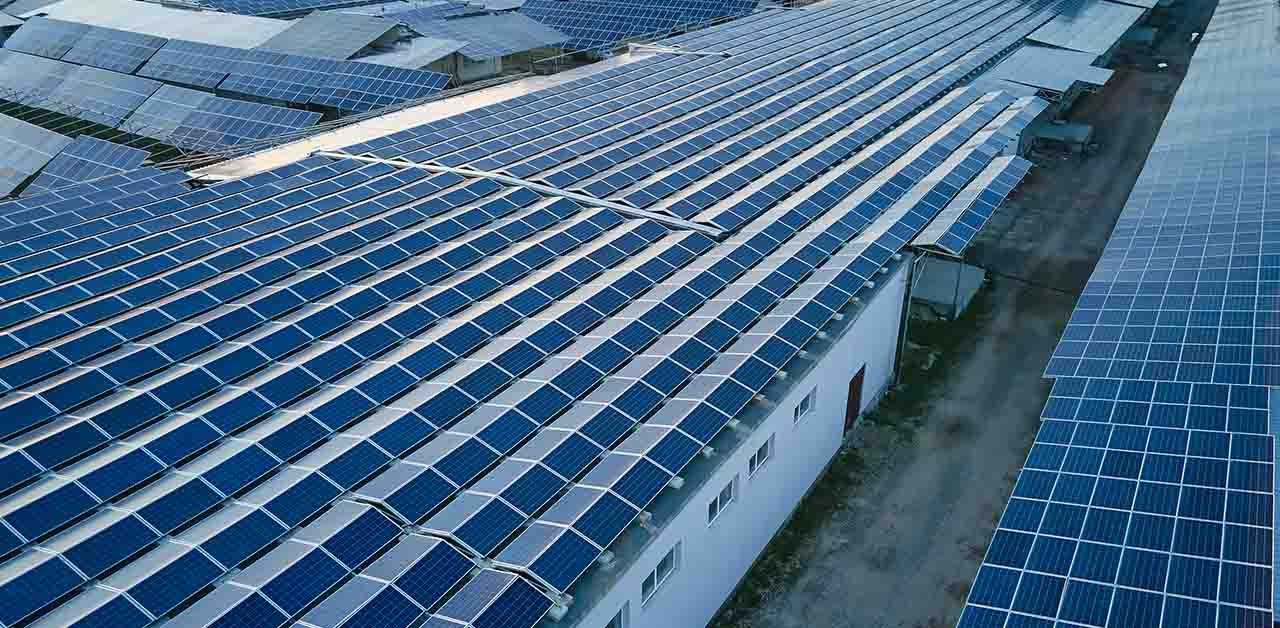
With the introduction of rooftop and ground-mount solar applications, the implementation of the Solar System in Pakistan is helping large corporates to capitalize on solar energy for a better future.

Promising Scope of Solar in Pakistan

Solar Power is the most affordable and environmentally sustainable way to overcome Pakistan’s energy deficit if its demand in industrial and commercial sectors is increased. With this approach, Pakistan’s government has also set a target of producing about 10 GWh of renewable energy by 2030. Furthermore, to maintain and expand the country’s solar power resources, the Alternative Energy Development Board (AEDB) also abolished solar energy tax duties in 2006.

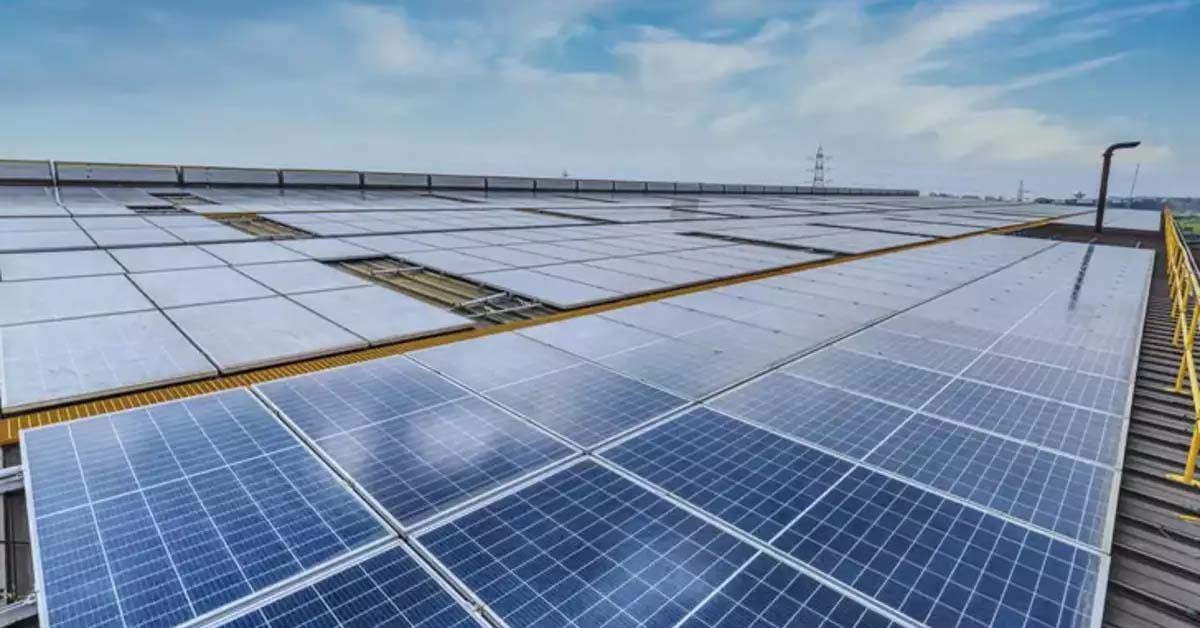
Rooftop Solar Power Plant

Hence, these uplifting policy regulations have encouraged large corporations and industrial sectors in Pakistan to collaborate with private energy providers to adopt renewable energy as a potential replacement for traditional energy sources.

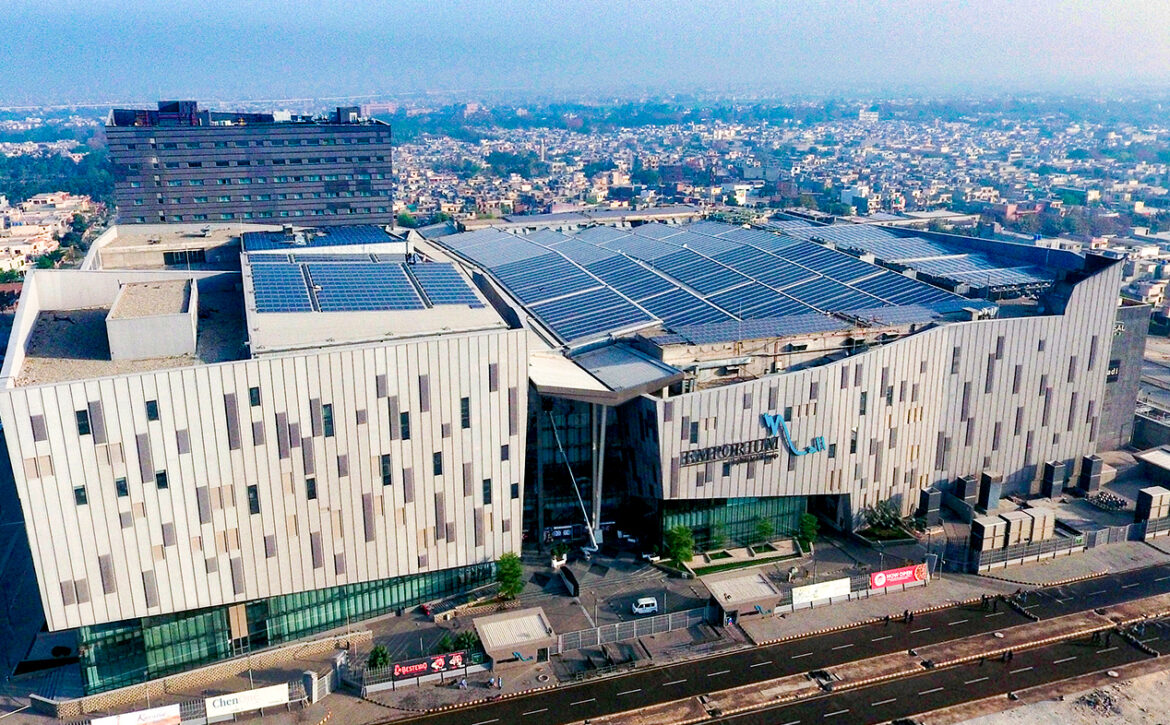
Shams Power is one of Pakistan’s recognized solar energy providers, serving the commercial and industrial sectors by facilitating solar sustainability on a PPA basis. Renowned corporates like METRO Cash & Carry Pakistan, Packages Mall, Maxim Agri Pvt Ltd, Nishat Hyundai, Emporium Mall, AkzoNobel Pakistan, and many more have chosen clean and green energy through power purchase agreement plan with zero upfront cost and guaranteed savings in return for discounted rates on energy tariff.

What does a commercial and industrial solar installation look like?

Solar Energy brings a tremendous amount of convenience to corporate sectors and solar financing investors. Since Pakistan is known to have an enormous capacity for solar power, every merchandising firm, factory owner, and educational institute can get the benefits of solar energy in one way or another.

With the help of Solar PPA, many solar installations like rooftop and ground-mounted solar have become feasible for different industrial and commercial sectors, and many corporations are pursuing more solar projects on a PPA basis. Apart from reducing the carbon footprints, it attracts environmentally conscious clients looking for sustainable practices while doing a business.

Hence, contrary to traditional grid energy, with the PPA Rooftop solar power plant, companies avail a guaranteed saving from Day 1.

Enhancing efficiency with Rooftop Solar

The designs of factory roofs should be flat and broad with enormous unused space, making it more convenient for the company to use the available area to install solar power plants for proper production.

The rooftop solar spaciously utilizes the free space with flexible architectural designs to maximize solar energy output from better angles by doing the yield and shadow analysis.

In Pakistan, many businesses, including Multi-National companies, have large production plants with plenty of flat roof areas, making it ideal for generating renewable and low-cost solar energy to capitalize on existing unutilized resources.

Moreover, in the case of the Rooftop Solar Power Plant, the analysis of yield and shadow should be done, so the implementation of the solar system becomes simpler and quicker.

Accessibility to Commercial Entities

Commercial property owners can significantly reduce the expenses of electricity and operational activities by adopting more practical resources. As Shams Power is installing Commercial Rooftop Solar Power Plant on a Solar PPA basis, so it’s very profitable for large commercial businesses, especially when renting commercial facilities to other companies.

Hence, the Rooftop Solar solution reduces the net energy bills while shielding the retail spaces, large corporates, manufacturing units, and warehouses.

Convenience to Industrial Corporations

Industrialists are encouraged to fulfill their energy needs with renewable energy. Solar System in Pakistan facilitates the industrialists to utilize solar power plants at full potential and saves the incentives of tax exemptions and capital subsidies.

With the initiation of multiple flexible solar buying opportunities like Solar PPA, the cost of installing a solar system for industrialists has become zero. Therefore, now all industries can take the lucrative benefits of switching their energy supply to a clean, green, and sustainable solution.

The flexible availability of solar applications like rooftop solar has changed the power industry in many ways. Providing opportunities for flourishing production growth has altered the dynamics of the power industry.

End-to-End Solar Services for more significant benefits

The solar industry has been evolving continuously, and more companies are now shifting towards captive solar solutions. Shams Power is one of Pakistan’s leading solar providers, offering its comprehensive services in commercial and industrial sectors all over Pakistan for Rooftop, Ground-Mounted, and Car-Port solar installation under solar Purchase Power Agreements (PPA), thus diminishing any financial risk for businesses.

Shams Power leverages its flexible and premium services in the solar industry by offering unique solutions for every type of company. By offering a diverse range of solar power solutions, including Rooftop Ground-mounted, and carport solar structured Power Plants, our skilled team provides all-inclusive and reliable services to its clients, including the initial costs of design and finance procurement, installation, operations, and maintenance facilities. Our end-to-end solar assistance can be recognized by the significant commercial and industrial market entities adopting our solar PV systems.

With zero investments, hassle-free operation, and maintenance facility, the solar Purchase Power Agreement (PPA) operations are performed safely and securely. These Solar endeavors always aim to encourage environmental sustainability and decrease electricity costs by boosting the demand for Solar systems in Pakistan.