Read More

Leading the Way in Renewable Energy: Mondelez Pakistan 2.2 MW Partnership with Shams Power

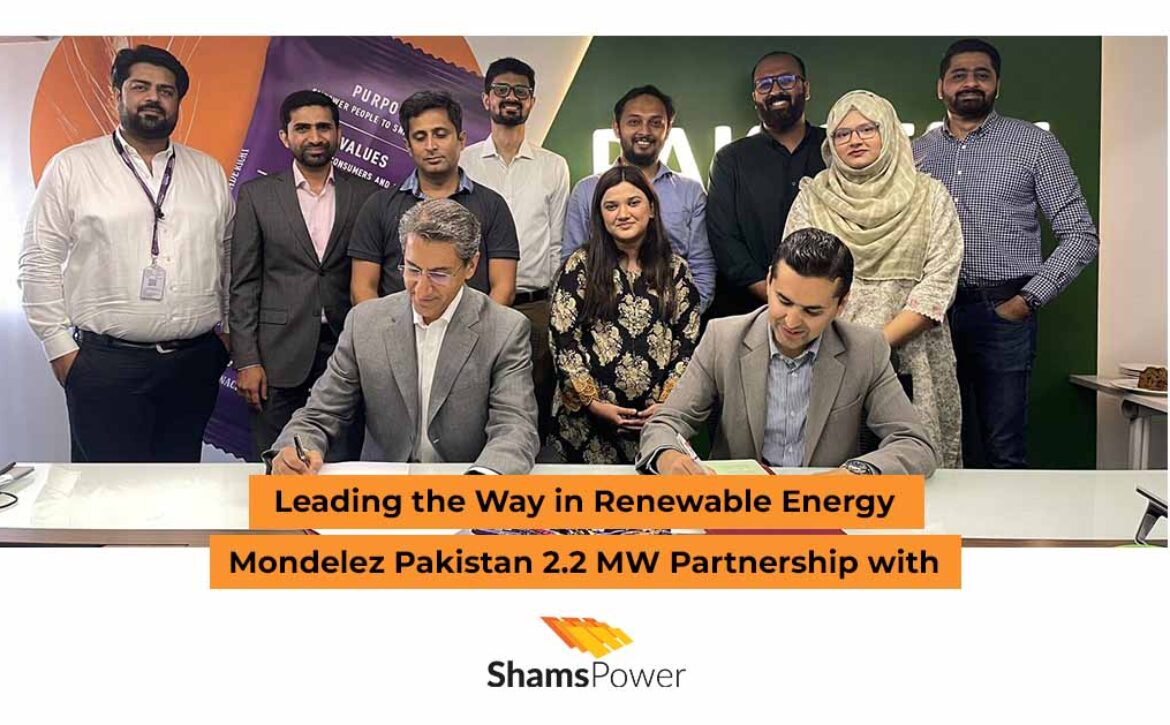
[vc_row][vc_column][vc_column_text]Mondelez Pakistan has partnered with Shams Power to solarize its confectionary and powdered beverages plants and to take the installed capacity to around 2.2 MW of Solar on both sites. This initiative aims to enhance sustainability and reduce carbon emissions.

Shams Power will install the equipment, manage the operation and maintenance of the solar systems throughout the agreement, and transfer the equipment to Mondelez Pakistan upon the term’s completion.

This project is expected to contribute approximately 3.3 million units of clean energy annually to Mondelez’s electricity mix, offsetting around 1,500 tons of carbon emissions each year. This reduction in emissions is equivalent to the annual electricity consumption of approximately 1,000 households.

Sami Wahid, Managing Director, Mondelez Pakistan, stated: “ESG and environment initiatives are at the top of our priorities. We take pride in the fact that happiness is at the core of all our products, and we wish to extend that spirit into all our operations. We stand strong with a happier healthier planet and will ensure all steps necessary towards building a progressive community inside and around Mondelez.”


Omar Malik, CEO, Shams Power, spoke on the value addition of alternate energy to any business operations. He was especially elated to have partnered with Mondelez, and commented: “We at Shams Power are excited to extend our partnership with Mondelez Pakistan and are thankful to their leadership and management team for their vision, and commitment towards green energy, contributing in a positive way to mitigating climate change We look forward to expanding this relationship and exploring additional sustainability initiatives together.”

Mondelez, through this collaboration with Shams Power, is set to further reduce its carbon footprint, lower energy costs, and promote sustainability.

By using renewable energy sources, the company aims to support environmental conservation and align with global efforts to combat climate change. This initiative also reflects Mondelez’s commitment to corporate social responsibility and sustainable business practices.[/vc_column_text][/vc_column][/vc_row]

Read More

The Rise of Pakistan’s C&I solar Business

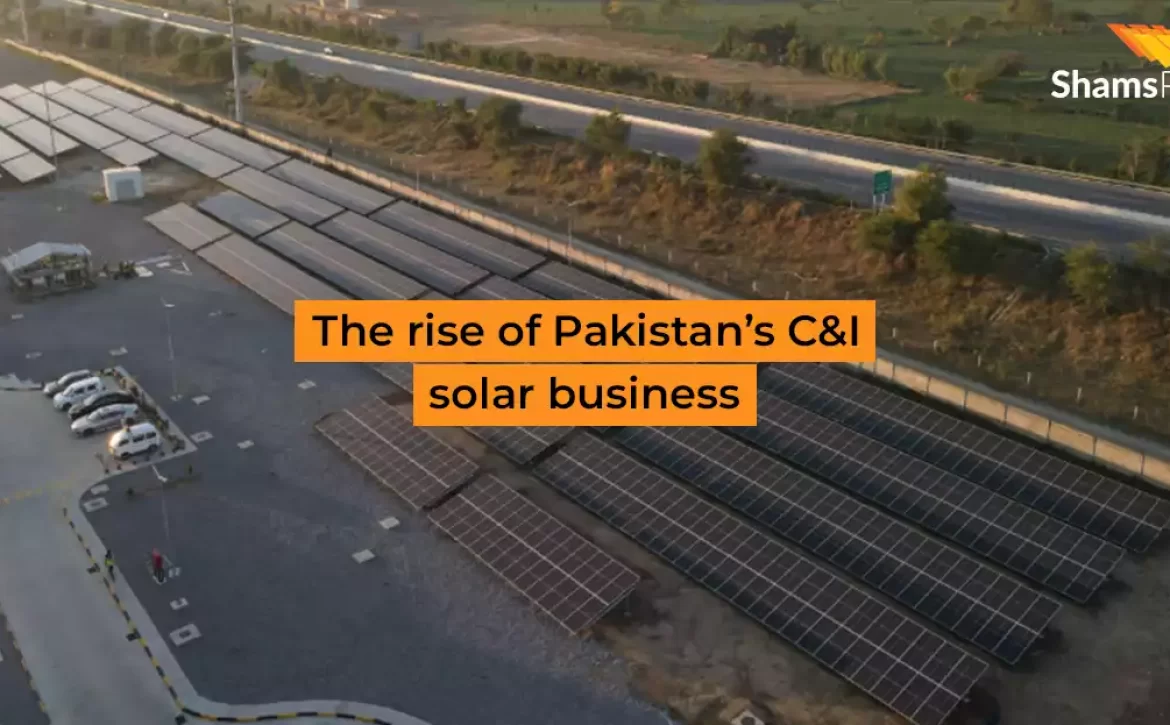
[vc_row][vc_column][vc_column_text]High energy prices and levies are becoming strong drivers for commercial and industrial (C&I) solar projects in Pakistan. Omar Malik, the CEO of Pakistani C&I solar developer Shams Power, speaks with pv magazine about market trends and challenges.

C&I power consumers are increasingly deploying solar arrays in Pakistan due to high energy prices and tariffs.

“The average industrial consumers currently pay a tariff of $0.12/kWh,” Omar Malik, the CEO of Pakistani solar developer Shams Power, told pv magazine. “But this is only half the story, as they also have to pay another $0.10 in taxes on every kilowatt-hour they purchase from the grid. The government relies on five to six sectors for the bulk of its indirect tax collection, with electricity being one of the largest ones.”

High-self consumption rates mean lower electricity costs and lower taxes. Under the nation’s current regulations, the sale of excess power to the grid under net metering is only allowed for generators up to 1 MW in size.

The government also only exempts import duties on solar panels. “The exemption on solar inverters has been recently removed,” Malik said. “But this has not had consequences on the market development.”

Pakistan’s National Electric Power Regulatory Authority (NEPRA) issued 1,596 net-metering licenses across the country with a cumulative capacity of 221.05 MW in the 2022-23 fiscal year, according to official statistics from the Associated Press of Pakistan.

Malik said the market is also growing in terms of panel imports.

“In 2022, 2.8 GW of solar panels were imported into Pakistan. In 2023, about 5 GW, despite the import controls, and this year the prediction is for up to 12 GW,” he stated.

Financing concerns

One of the main hurdles to address in Pakistan’s C&I segment is access to financing.

“Banks and lenders in Pakistan keep considering solar assets as very fast depreciating assets,” Malik explained, noting that the volatility of the Pakistani rupee is still an issue compared to India, where access to financing is easier. “The Indian currency is stable enough for international investors.”

Despite these challenges, Shams Power was able to raise $20 million debt from local banks backed by a guarantee from an international credit enhancer, GuarantCo.

“In order to achieve this, we have to bring the bank in at the project finance stage,” Malik explained. “Or we can even do this after a year or two of operation, when we have some defined cash flows and we can show how these assets are performing and get the portfolio refinanced.”

Many Pakistani companies that export denim and textiles to the US and European markets face pressure from their buyers to support their supply chains with clean energy.

“In effect, there is some pressure to move toward renewables, but it is not coming from the government,” said Malik.

Storage segment

The C&I segment does not yet offer a big business case for battery storage.

“Batteries are still not economically viable when it comes to grid parity owing to high duties and taxes on import of batteries and storage technologies,” Irteza Ubaid, chief operating officer for Shams Power, told pv magazine. “With the current electricity price scheme in place, you can only generate profits when there is a power outage. Or when peak rates hit, you can start using batteries. However, the levelized cost of storage of C&I tier-1 batteries today, however, is still close to $0.35/kWh. We are still not able to give an economic benefit to clients to set up storage because they can buy grid power at less than $0.30, they’re really not interested – unless they have a continuous production process and cannot afford any interruptions.”

Shams Power is currently building 5 MWh of storage projects in Pakistan.

“We have been educating our clients and convincing them about not just looking at the per kWh cost, but also looking at additional benefits like the quality of power and environmental benefits,” Ubaid said.

Import duties are still being imposed on batteries, which means upfront costs remain higher than in other, more mature renewable energy markets.

Shams Power has a track record of deploying more than 40 MW of C&I solar for major clients such as Coca-Cola, Mondelez, AkzoNobel, Metro, Packages, Shifa Hospital, Hyundai, and Sanofi. It has a pipeline of more than 200 MW with large multinationals and local businesses across Pakistan.[/vc_column_text][/vc_column][/vc_row]

Read More

Analysing the Viability of Solar Power Integration in Meeting Pakistan’s Energy Demand for B2B Success

[vc_row][vc_column][vc_column_text]Pakistan possesses abundant renewable energy resources, poised to catalyse a transformative shift in its energy sector. With vast potential in wind, solar, and biomass, the nation stands at the brink of substantial progress. These renewable sources not only offer a solution to the energy crisis but also pave the way for sustainable development, particularly in commercial and industrial sectors.

Solar energy is a clean and sustainable energy source that emits no greenhouse gases or air pollutants during the generation of power. Adopting solar energy can assist Pakistan in reducing its carbon footprint and combating air pollution, which is a major concern in many of its cities.

The cost of solar technology has steadily decreased internationally, making renewable energy sources more economically viable. Pakistan can capitalise on this trend by investing in solar systems and lowering overall electricity production costs to provide energy to the country.

Why is it ideal for Pakistan to invest in Solar Power

Pakistan’s geographic location is a plus point for solar technology. The country is located at latitudes 23°35′ to 37°05′ N and longitudes 60°50′ to 77°50′ E, an aerial belt that receives a large amount of daylight which can produce around 95% energy during daylight hours (8 to 8.5 hours per day). We also have 185 to 290 sunny days per year.

Receiving all this sunlight all year round, Pakistan has 2.9 million MW of solar power potential, making it a viable source of energy to tap for producing power.

Harnessing solar energy lessens Pakistan’s reliance on imported fossil fuels, which are expensive and volatile on the international market. This improves the country’s energy security by minimising disruptions in the energy supply.

Pakistan’s Solar Energy Market is estimated to increase at a compound annual growth rate (CAGR) of 49.68% from 1.30 gigatonnes in 2023 to 9.77 gigatonnes in 2028.

The Pakistani government has set a few goals such as obtaining 30% of the country’s power from renewable sources by 2030. To fulfil these goals, the government is aiming to build solar-generating facilities across the country through the Alternative Energy Development Board.

Some of Shams successful installations

Shifa International Hospital

Shifa International Hospital has implemented a significant renewable energy initiative by installing rooftop and parking solar panels. With a total capacity of 1 MW, this solar system is seamlessly integrated into the grid, operating as a grid-tied setup.

Tripack Films Ltd

Tripack Films Ltd has undertaken a significant step towards sustainable energy by installing both rooftop and ground-mounted solar panels. With a combined total capacity of 5 MW, this solar installation is seamlessly integrated into the grid, operating as a grid-tied system.

Packages Mall

With a robust total capacity of 3 MW, this solar endeavour seamlessly integrates into the grid, operating as a grid-tied system.

Nishant Hyundai

Nishat Hyundai is pioneering a sustainable energy revolution through its rooftop solar installation. With an impressive total capacity of 2.5 MW, this solar array seamlessly integrates with the grid, operating in a grid-tied configuration.

Initiatives and collaborations taken by Pakistan’s Government

The Pakistan government has given the green light to the National Solar Energy Initiative, aiming to generate 10,000 megawatts (MW) of electricity through solar projects. This initiative targets cutting down the import costs of diesel and furnace oil. It seeks to transition government buildings and tube wells to solar power, while also partially replacing power plants running on diesel, coal, and furnace oil. Notably, Pakistan’s President House has already shifted to green energy, promoting renewable energy adoption since 2021.

Furthermore, within the framework of the China Pakistan Economic Corridor (CPEC), considerable investments are earmarked to promote clean energy sources, including various renewable energy projects. Among these endeavours is a significant 1,000MW solar project.

The Quaid-e-Azam solar park represents a pivotal collaboration between the Pakistani government and foreign partners, notably China, resulting in the establishment of a 100MW solar capacity in Bahawalpur City.

Moreover, the Japan International Cooperation Agency (JICA) has played a crucial role in constructing a 365W solar facility, amplifying interest and investment in solar energy initiatives. Consequently, the Alternative Energy Development Board (AEDB) has extended letters of intent to twenty-eight enterprises, totaling a capacity of 956.52 MW, further bolstering Pakistan’s solar energy landscape.

Such initiatives have spurred numerous solar energy firms in Pakistan to actively

address the disparities between energy supply and demand  in the commercial and industrial sectors (C&I). Solar infrastructure such as rooftop installations, carports, and ground-mounted systems are further enabling diverse installation opportunities for enterprises of all kinds.

Shams Power: Leading Solar Energy Provider

In its journey spanning over half a decade, Shams Power takes pride in successfully operating 30+ MW of distributed solar projects for many renowned corporations of Pakistan, efficiently utilising their rooftop, carport, and ground areas. As part of our growing client portfolio, we effectively serve large Retail, Wholesale, Food Processing, Educational, Automobile, Hospital, and Manufacturing industries all over Pakistan.Our valued clientele includes METRO Cash & Carry Pakistan, Coca-Cola, Mondelez, Hyundai Nishat Motors, Packages Mall, AkzoNobel, Shifa Hospital, Government College Lahore (GCU), Hilal Foods, and many more.

We provide you with an end to end solar solution. We specialise in rooftop solar power plants for building rooftops, car parks, and open spaces within the premises on Build Own Operate Transfer (BOOT) basis and are an end-to-end solution provider – including design, engineering, procurement, construction, monitoring, and maintenance.

Are you considering Solar PPA to become energy independent? Click here and contact your expert.[/vc_column_text][/vc_column][/vc_row]